For yr 11 2a/2b english we have been assigned to write an original essay on any topic. I have chosen oil reserves and the effects it has on the econom...
For yr 11 2a/2b english we have been assigned to write an original essay on any topic. I have chosen oil reserves and the effects it has on the economy but am stumped. Can you guys give me your opinions on the writing so far and any other tips.
(we have been focusing on techniques language tone and visual features of feature articles)
Thanks
The oil has run out and your car is a useless piece of metal. Society is dependent on oil, and it has grounded to a halt. What now?
Solar panelled or hydro powered cars? Their just unreliant and slow… We could go back to horse and cart, and travel like they did in 1940 (before cars). Yer sure that would go down well.
Could you imagine the streets of Perth filled with horse, carts, and impatient drivers, with no sense of direction or rules? I didn’t think so. The fact is our society is reliant on oil and when it does run out… what will we do?
There’s no main substitution for oil, and we’ve always known it is a limited resource. Which means one day we aree actually going to run out. A scary thought when you actually think about how many things rely on oil.
We use oil to travel from home to work and back again, we use it too cook our food and we (well farmers) even need it to grown our food. Then we need it to process and transport our food to the shops. Not to mention our industrial transportation and military uses oil has. Its mind boggling when we stop and think about how dependant our economy and lifestyle is on it.
The fact that oil will run out ‘one day’ has always been there in the back of our minds, but how many of us really appreciate what that means?
We’ve become so use to having oil that we haven’t considered our investment in the alternatives. I guess we think that we have plenty of time up our sleeves, and that by the time the oil reserves get that low, the world will have switched to renewable energy on a high scale and it’ll be okay, but what if we haven’t?
People lived here before there were such things as electricity and oil, so it must be possible. They grew their own food, washed their own clothes, travelled around on horseback, lit fires to stay warm and created tools and resources. Our civilisation was made off of this, but would we ever be able to cope and go back to the old fashioned way?
What is our plan B when plan A fails? To bail on everything we’ve accomplished? To bail on our homes, our cars and our families? No. oil isn’t our lives. Oil is just a resource we use to create comfort, technology and civilisation.
Our problem is that by depending on new development and technology to drive our countries economy, we find that when this process slows or stops we stop. If we don’t create a stable process to control or use or resources we will find ourselves with no oil, no income no society.
Fellow Australians would agree that we don’t substantially control our use of oil and that it in fact will run out one day. We all will have to deal with it one day, and the choices we make today will have a large impact on the outcome
recovery and economic development that lasted for 50 years after the Great Depression. Conservatives argue that the government cannot create economic activity, that only business does that. They argue that WWII was the reason why we were lifted out of the Depression. Even if this is true, where does the money come from when the government spends it on the military? The government spent money on products, this created economic activity, and lifted us out of the depression! We have seen this model so many times that Conservatives must be fools. Ronald Reagan increased defense spending, this created a demand for products, and industry rose up to meet this demand. This is how the economy works. If no one wants to spend money, the economy sputters, if anyone, including the government spends money then the economy will improve. It is not that difficult. If you argue (conservatives) that WWII brought us out of the Great Depression, then you actually disprove your entire argument, by showing that your assumption is incorrect.
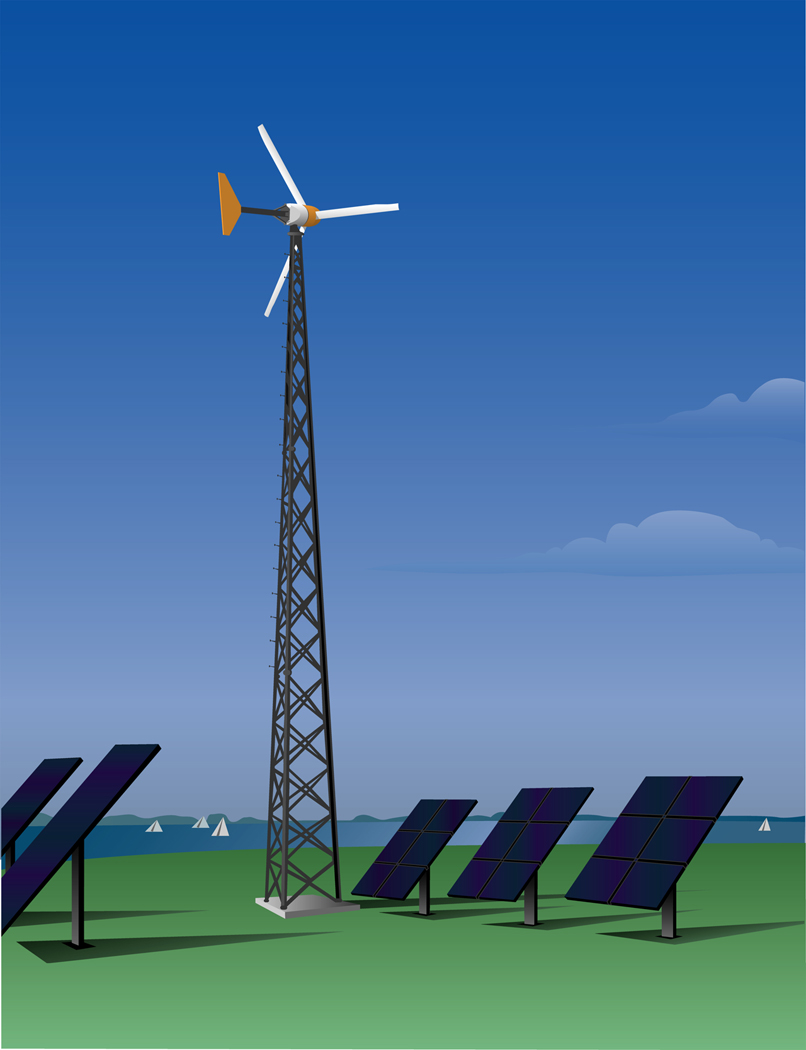
If the government was to put lots of money into an industry that would actually benefit everyone (like solar and wind power), then the economy would pick up, and we would actually do something that is good for the masses, and will improve the efficiency of our society.
My point is not that governmental spending is the most efficient way to stimulate the economy, it is clearly not. However, if governmental spending will never work, yet governmental spending worked then, then sometimes, it will work.
I used a solar power calculator on SharpUSA. And found that ,000 worth of solar cells would save only 0 per year in costs. Is it possible to sell these kinds of new technologies? That would take 35 years to payback. With the economy about to break, how can we make the change, with 35 years payback? Man this isnt gonna work.
In this short interview Professor Chris Binns explains a project to develop Thin Film Solar Cell Technology. Norwegian company EnSol AS has patented a ground breaking, thin film solar cell technology which they seek to develop commercially by 2016. The company is now working with the University of Leicester Department of Physics and Astronomy to develop this revolutionary new type of solar cell material that could be coated as a thin film on, for example, windows in buildings to produce power on a large scale. The new material has been designed by EnSol AS and is based on nanoparticles that can be synthesised in Leicester. The University of Leicester Department of Physics and Astronomy has a long history in the field of nanoparticles and has equipment that is uniquely suited in the world to produce small amounts of the material for prototypes. Photovoltaics are destined to form a key power generating method as part of a low carbon economy and the new technology will bring that a stage closer. The material is composed of metal nanoparticles (diameters ~ 10 nm) embedded in a transparent composite matrix. EnSol’s next generation PV cell technology has tremendous potential for lower environmental impact and much more cost effective production and purchase than conventional devices. For more information about Thin Film Solar Cell Technology see; www.ensol.no For more information about Physics and Astronomy at the University of Leicester see; www2.le.ac.uk
http://news.yahoo.com/s/ap/20100109/ap_on_bi_ge/as_china_solar_power
Al Gore and Obama both has said that the new US economy will be made up of "Green jobs".
Now a California company has received a lucrative contract to build a huge solar electric-generating plant in China. Is this the future? Can being a tree-hugging, alternative energy company make billions?
Carter started and ethanol program which Reagan promptly stopped after Carter’s defeat. Reagan, to make a statement about which direction we would go, removed the solar panels from the White House roof when elected.
More intelligent societies like German who refuse to be lead my the nose by their corporate masters are light years ahead of us in solar technology.
If we don’t wake up, we will be using solar and wind technology purchased from the Chinese.
Most Americans aren’t smart enough to realize that we are sacrificing our future, our economy and our environment for the sake of oil companies.
This is fantastic, it just shows what you can do with renewable energy. This is the way forward for vehicle technology. An electric powered van that uses onboard wind and solar generation to charge it’s batteries. For more info go to: www.solarvan.co.uk
A documentary the other night showed an office building that was supplied by solar panels and how great it was. Then they brought up the fact that the cost was astronomical and it was 90% build with government concessions.
American has always set the standards and that is why much of our industry is in countries like China where they have no limits on pollution.
Will this break the country or us? Shouldn’t we drill and phase this in as we go? there was an article posted earlier which mentioned what happened during the depression that jobs were created at a 25% increase in wages, but costs stagnated the economy.
Pretty interesting answers. I don’t think we will be as bad as China, but this needs to be phased in at the least. As some have said, predicted on the startup cost.